

Custom Web Development vs Ready-Made Solutions
September 17, 2026Benefits of PHP Web Development for Businesses
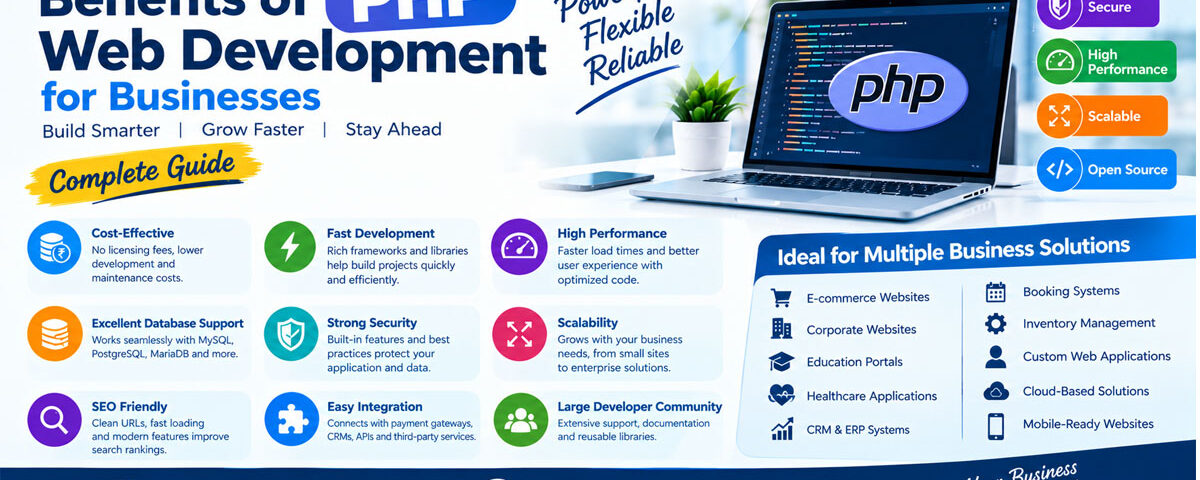
Benefits of PHP Web Development for Businesses
Benefits of PHP Web Development for Businesses
Benefits of PHP Web Development for Businesses
Benefits of PHP Web Development for Businesses
Introduction
In today’s digital-first world, businesses need fast, secure, and scalable websites to remain competitive. Choosing the right technology for web development plays a crucial role in creating a successful online presence. Among the many programming languages available, PHP (Hypertext Preprocessor) remains one of the most popular and trusted server-side scripting languages for building dynamic websites and web applications.
From startups and small businesses to multinational enterprises, millions of websites rely on PHP because of its flexibility, affordability, and robust ecosystem. Whether you’re developing a corporate website, an e-commerce platform, a customer portal, or a custom web application, PHP offers a powerful foundation for long-term success.
In this guide, we’ll explore the benefits of PHP web development for businesses, why it remains a preferred choice for developers, and how it can help your organization grow online.
What is PHP?
PHP is an open-source server-side scripting language specifically designed for web development. It enables developers to create dynamic, interactive, and database-driven websites.
PHP supports:
- Dynamic web pages
- Content Management Systems (CMS)
- E-commerce websites
- Enterprise applications
- Customer relationship management (CRM) systems
- Web portals
- APIs and web services
Its compatibility with major databases and web servers makes it one of the most versatile technologies in modern web development.
Why Businesses Choose PHP
PHP powers a significant portion of websites on the internet due to its reliability, flexibility, and extensive developer community.
Businesses choose PHP because it offers:
- Fast development
- Cost-effective solutions
- High scalability
- Excellent security
- Easy maintenance
- Strong community support
These advantages make PHP suitable for businesses of all sizes.
Top Benefits of PHP Web Development
1. Cost-Effective Development
One of the biggest advantages of PHP is that it is open-source and free to use.
Benefits include:
- No licensing fees
- Lower development costs
- Affordable maintenance
- Reduced project expenses
Businesses can invest more in features and marketing rather than software licensing.
2. Fast Development Process
PHP includes numerous built-in functions and frameworks that accelerate development.
Popular PHP frameworks include:
- Laravel
- CodeIgniter
- Symfony
- Yii
- CakePHP
These frameworks help developers build secure and feature-rich applications more efficiently.
3. High Performance
PHP applications are known for delivering fast response times when properly optimized.
Performance benefits include:
- Quick page loading
- Efficient server resource utilization
- Improved user experience
- Better website responsiveness
Fast-loading websites also contribute to improved search engine rankings.
4. Excellent Database Support
PHP integrates seamlessly with various databases such as:
- MySQL
- PostgreSQL
- MariaDB
- SQLite
- Oracle
- Microsoft SQL Server
This flexibility enables businesses to choose the database that best fits their requirements.
5. Platform Independence
PHP works across multiple operating systems, including:
- Windows
- Linux
- macOS
- UNIX
It also supports major web servers such as Apache and Nginx, making deployment flexible and straightforward.
6. Scalability
As businesses grow, their websites and applications need to handle increased traffic and functionality.
PHP supports scalable development by allowing:
- Modular architecture
- API integrations
- Load balancing
- Cloud deployment
- Microservices (when designed appropriately)
This ensures that applications can evolve alongside business needs.
7. Strong Security Features
Modern PHP applications can be highly secure when developed following best practices.
Security measures include:
- Input validation
- Output escaping
- Password hashing
- CSRF protection
- SQL injection prevention
- Session security
- Authentication and authorization
Using trusted frameworks further enhances application security.
8. SEO-Friendly Development
PHP enables developers to build websites that follow SEO best practices.
SEO advantages include:
- Clean URL structures
- Fast page loading
- Mobile responsiveness
- Schema markup implementation
- XML sitemap generation
- Optimized metadata management
Combined with quality content, these features improve search engine visibility.
9. Easy Integration
PHP easily integrates with third-party services such as:
- Payment gateways
- CRM software
- ERP systems
- Email platforms
- Social media APIs
- Cloud storage
- Analytics tools
This flexibility helps businesses streamline operations and improve customer experiences.
10. Large Developer Community
PHP has one of the largest developer communities in the world.
Advantages include:
- Extensive documentation
- Regular updates
- Community support
- Thousands of reusable libraries
- Easy access to skilled developers
Businesses benefit from faster troubleshooting and continuous improvements.
Popular Business Applications Built with PHP
PHP is suitable for a wide range of business solutions, including:
- Corporate websites
- E-commerce stores
- Customer portals
- Learning management systems (LMS)
- Booking systems
- Inventory management software
- CRM platforms
- Business dashboards
- Membership websites
- Custom web applications
Its versatility allows businesses to implement solutions tailored to their operational needs.
PHP Frameworks for Business Applications
Using modern frameworks improves development speed, maintainability, and security.
Laravel
Known for elegant syntax, powerful features, and a rich ecosystem, Laravel is ideal for enterprise applications and custom web solutions.
Symfony
Suitable for large-scale and complex business applications requiring high flexibility.
CodeIgniter
A lightweight framework that is perfect for small to medium-sized projects.
Yii
Offers high performance and is well-suited for data-intensive applications.
Selecting the right framework depends on the project’s complexity and long-term goals.
Best Practices for PHP Web Development
To maximize the benefits of PHP, businesses should:
- Use the latest supported PHP version.
- Follow secure coding standards.
- Choose a reliable hosting provider.
- Optimize database queries.
- Implement caching mechanisms.
- Regularly update dependencies.
- Perform routine security audits.
- Optimize images and assets.
- Test applications thoroughly.
- Maintain regular backups.
These practices improve performance, security, and long-term reliability.
Future of PHP
PHP continues to evolve with regular updates that enhance performance, security, and developer productivity.
Modern PHP supports:
- Improved execution speed
- Advanced type declarations
- Better error handling
- Modern object-oriented programming
- API development
- Cloud-native applications
With ongoing community support and continuous improvements, PHP remains a strong choice for business web development.
Conclusion
PHP continues to be one of the most reliable and cost-effective technologies for building business websites and web applications. Its open-source nature, strong security capabilities, scalability, excellent database support, and extensive ecosystem make it an ideal choice for organizations looking to establish or expand their online presence.
Whether you’re launching a startup website, creating an e-commerce platform, or developing a custom enterprise application, PHP offers the flexibility and performance needed to support your business goals. By partnering with experienced PHP developers and following modern development practices, businesses can create secure, SEO-friendly, and scalable digital solutions that drive growth and customer engagement.nch and lower upfront costs, a ready-made solution may be the ideal starting point.ne presence.
